


Aging is a natural biological process that affects all tissues of the human body, including those that make up a person's appearance.At the same time, facial tissue is more prone to aging than others, because it is constantly under the influence of environmental factors, chewing, facial function and speech.Since the face is a kind of "calling card" of a person, the issue of preserving and restoring youthful facial skin is extremely important and relevant.Among the many methods and techniques used today to solve this problem, laser facial rejuvenation deserves special attention.
The essence of this method is the fractional effect of the laser beam on the skin.The laser stream is divided into many very thin beams that affect microscopic areas of the skin located at a strictly defined depth and vaporize them.The intact cells located between these areas stimulate the active production of collagen and elastin - two main "building materials", which are formed less and less in the human body with age.After this procedure, the skin tone improves, small and moderate wrinkles are corrected, bags under the eyes are removed and the oval of the face is tightened.At the same time, the recovery period is reduced to a minimum.Fractional laser rejuvenation can be used not only as an independent method, but also to improve the results of plastic surgery or laser skin resurfacing.
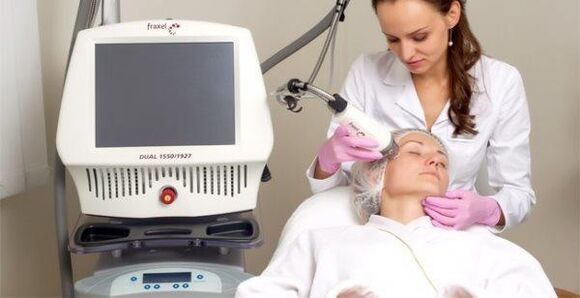
Lasers are used for fractional laser rejuvenation
For the first time in the world, a patent on the principle of fractional laser exposure was received in 2004 by the American company Palomar Medical Technologies.Currently, fractional laser systems are represented by several laser technology companies.The most widely used laser systems are from manufacturers Palomar and Fraxel, Affirm laser from the famous American company Cynosure, GentleYAG laser from Candela and others.Since all these installations have the same operating principle, the outcome of the procedure is largely determined by the professionalism of the specialist who performs the procedure.
Contraindications to laser rejuvenation procedures
Absolute contraindications for the procedure are:
- Pregnancy, lactation.
- Focus of the inflammatory process in the affected area.
- Psoriasis and dermatosis.
- Focus of herpetic infection in the affected area.
- Chemical peeling of the intended treatment area is performed less than two weeks before the procedure.
- Oncological diseases.
- Systemic diseases of blood, immune system, connective tissue.
- Diabetes mellitus in the decompensation stage.
- Severe forms of hypertension and coronary heart disease.
- Varicose veins in the procedure area.
- Tendency to form keloid scars.
- A case of vitiligo in the family.
Relative contraindications include active insolation in the last three weeks before the procedure, that is, the presence of a fresh tan, as well as superficial and moderate tanning done in the treatment area less than three weeks before the procedure.
Advantages of the fractional laser rejuvenation method
Thanks to the targeted effect, skin damage is minimal, so all traces after the procedure disappear within 3-4 days.
This method allows you to treat large areas of the skin in one procedure, while preserving and activating the skin's regenerative resources, which ensures rapid recovery and a long-term increase in positive effects.
This procedure does not require anesthesia and can be performed on the neck, décolleté and eye area.
Side effects are rare.Possible complications include the temporary appearance of red-purple spots in the treatment area, small and fleeting itching, activation of herpes infection, changes in skin texture, including burning, peeling, and crusting.Scarring, hyper- and hypopigmentation of the skin in the procedure area is very rare, but can be permanent.
What is a full course of laser rejuvenation procedures?
A fractional laser treatment session lasts 20-40 minutes, depending on the nature of the problem and the area of the treated area.The procedure is repeated after 3-4 weeks.In total, 3-4 sessions are usually required.The maximum positive effect occurs within three months after the last procedure.It is recommended to carry out a maintenance session once every 10-14 months.
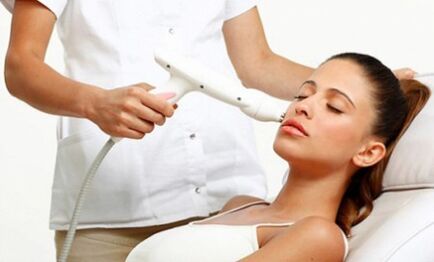
What to do after a laser facial rejuvenation procedure
A slight burning sensation that may be felt after the procedure disappears within 1-2 hours, while slight redness and swelling may persist for 1-3 days.During this period, you should use external products (creams, ointments, sprays) containing dexpanthenol, for example, Bepanten, Panthenol, D-Panthenol.After the disappearance of the listed symptoms and before the next procedure, a cream with hyaluronic acid is used.
You can shower and wash your face on the day of the procedure, but it is better to wait with the sauna and swimming pool.Basic cosmetics can be used the day after the procedure.
It is mandatory to use sunscreen with a protection factor of at least 30, because at this time the skin's metabolism is activated and it becomes very sensitive to sunlight.
After the procedure, you must follow the recommendations of the specialist who performed the procedure.The choice of cosmetic preparations, the frequency and duration of their use is determined individually and depends on the type of skin and its characteristics.
Fractional laser rejuvenation is a cosmetic procedure in which the skin is exposed to multiple laser beams.The purpose of this influence is to activate the process of regeneration and collagenogenesis.This is a relatively new hardware technique, but already very popular.It is otherwise called Fraxel, fractional laser resurfacing or photothermolysis.
Principles of operation and types of fractional laser rejuvenation
How does a fractional laser work?Micro radiation emitted by the device causes thermal shock, in response to "lazy" skin cells begin to work more actively.To repair damaged areas, they divide faster.Old, ineffective cells die, making way for young ones.Heating of the inner layer of the skin is accompanied by partial denaturation of proteins, as well as the formation of new components of the extracellular matrix, including elastin and collagen.
Based on the depth of impact, ablative and non-ablative laser rejuvenation are distinguished.The first is superficial and resembles sanding.Laser treatment on the upper layer of the skin is accompanied by evaporation of moisture and damage to the epidermis.After healing, the skin becomes firmer, its texture and color become even.During non-ablative photothermolysis, the laser affects the inner layer of the skin.In this case, no open wound is formed.
Each type of rejuvenation has its advantages and disadvantages.Therefore, the effect of ablative laser resurfacing is noticeable after the first procedure.Using this method you can get rid of deep wrinkles and age spots, after acne, stretch marks, scars.With a non-ablative procedure, there is no risk of infection, and the anti-aging effect can be seen for several years.This type of photothermolysis is recommended for people under the age of 40, with early signs of aging: fine wrinkles, reduced turgor.
Indications and contraindications for the procedure
You should use the photothermolysis procedure if you have:
- Flabby, sagging skin.
- Both fine and deep wrinkles, crow's feet.
- Pigmentation of any origin.
- Increased sebum secretion.
- Enlarged pores, prone to acne.
- Scars, stretch marks, after acne.
- Spider veins (rosacea).
- Dull facial skin.
Contraindications to fractional laser rejuvenation are:
- Allergies, psoriasis.
- Autoimmune disease.
- Pregnancy, breastfeeding.
- Blood disease.
- Skin infection, inflammation in the intended treatment area.
- Any chronic disease in the decompensation stage.
- Oncology.
- Increased body temperature.
- Diabetes mellitus.
- Tendency to form keloid scars.
- Epilepsy.
Features of laser rejuvenation
Preparation for the fractional photothermolysis procedure involves avoiding visiting solariums and beaches for two weeks.During this time, you should also not cleanse your skin, perform chemical peels, or take sulfonamides, fluoroquinolones, or tetracyclines.Three days before the procedure, stop going to the swimming pool, bathhouse, sauna, and treat the intended exposure area with alcohol-containing cosmetics.To avoid complications, cosmetologists can prescribe antiviral and antibacterial drugs for this period.The day before the procedure should be spent without alcohol and cigarettes, and do not go to the gym.
Before the laser treatment, the skin is cleaned of cosmetics and impurities.In general, the laser effect is felt as an unpleasant tingling sensation, but sometimes pain relief may be necessary.In this case, the cosmetic specialist uses anesthetic on the prepared skin area.After the ointment takes effect, he begins to treat the skin with a laser.The duration of the procedure depends on the extent of the treatment area and ranges from a few minutes to an hour.Finally, the skin is soothed with a nourishing cream.
For the first days after the procedure, you should not use alcohol-based products or compress the area of the body where photothermolysis was performed using compression garments.It is recommended to exclude physical activity, visit a swimming pool, sauna or bathhouse for a week, and limit the time spent outside.The skin is moisturized with a special cream three times a day.And so on for half a month.It is undesirable to exfoliate or use cosmetics with retinol or salicylic acid.You must use a cream with a sun protection factor of 35 or more for two months.
How many procedures are needed to achieve results?What effect do you expect?
The recovery period after laser fractional rejuvenation lasts from 3 to 7 days.The speed of recovery largely depends on lifestyle.Drinking alcohol, smoking, excessive activity, unbalanced diet, insomnia and anxiety - all these can slow down the regeneration process.
The first three days after laser exposure, skin redness and slight swelling can be observed.Pain relievers and cooling the skin can help reduce discomfort.It is normal for skin to feel tight and flaky throughout the week.A side effect of the procedure may be a bronze-brown color, which disappears by itself after half a month.
Lasting results after fractional photothermolysis occur after 2-5 procedures.Only a cosmetologist can determine the number of sessions more specifically, based on preliminary data.The interval between procedures is 3-4 weeks.As a result of fractional laser rejuvenation, the aging process is inhibited: wrinkles disappear or become less noticeable, turgor increases, the appearance of pores decreases, and the skin improves.This method is an effective remedy in the fight against scars, pigmentation, post-acne, and stretch marks.
Fractional laser rejuvenation is one of the three most popular hardware cosmetic procedures.Its advantages include effectiveness, short healing period, and physiology.The results can be seen after the first procedure and last up to three years.This method has various indications.It is possible to choose the depth of laser exposure.
A woman of any age wants to see beautiful facial skin in the mirror, but not everyone is ready to go under the plastic surgeon's knife.
In this case, fractional rejuvenation through the use of lasers will come to the rescue, which in modern cosmetology occupies one of the first places in anti-aging procedures.
Types and methods of influence
Ablative photothermolysis
There are two methods of photothermolysis, each suitable for different applications.The cosmetologist will help you make the right choice in favor of the optimal option at your initial appointment.
This method is suitable for rejuvenating skin that has just begun to experience natural aging.
The network of micro-damages with the help of a laser affects exclusively the upper layer of the epidermis, forcing it to regenerate in a short time.
The results appear after the first procedure, as soon as the wound heals.
Non-ablative photothermolysis
This method is a slightly more serious intervention.The laser beam penetrates into the inner layer of the epidermis, ignoring the cells outside.
Lesions also promote the production of elastin and collagen, such as ablative photothermolysis.
The healing process is longer and the effects are more noticeable.Suitable for removing serious problems on the face.
Hint
Any person who wants to look younger without a major lift can use this method.
Fractional laser treatment combats many imperfections on the face, including:
- severe wrinkles on the forehead;
- nasolabial folds;
- crow's feet threads around the eyes;
- the epidermis "flows" down;
- skin pigmentation, scars, scars, spider veins;
- problems with enlarged pores, acne.
Laser therapy shows high effectiveness in eliminating all these problems.
The only caveat is that, depending on the severity of the imperfection, several procedures may be required.
Contraindications
Like any other external influence on the body, fractional laser rejuvenation has contraindications, in the presence of which it is forbidden to use such a procedure.
This may include:
- the presence of serious inflammation on the face;
- infectious, fungal skin lesions;
- epidermal diseases - psoriasis, eczema;
- excessive dry skin;
- malignant neoplasms in the body;
- history of epilepsy;
- heart disease;
- varicose veins on the face;
- herpes in the acute stage;
- pregnancy, breastfeeding;
- immunodeficiency conditions;
- bronchial asthma, serious allergic reactions;
- nervous disease.
All contraindications are conditional, that is, the cosmetologist weighs all the patient's risks.
Sometimes you need to first undergo treatment for skin problems or wait for the remission of a chronic disease, after which rejuvenation is still carried out.
Preparation
Since the intervention is not a surgical operation, no extensive preparation is required.Initially, you should consult a cosmetic specialist who will assess the condition of the skin and also give recommendations on the necessary photorejuvenation method.
The patient is obliged to tell the doctor about all conditions and diseases in the medical history, as well as the exacerbation of chronic diseases in the past six months.
If there is, the specialist will advise you to visit a specialist doctor to assess the safety of the procedure.
You should also take blood and urine tests to identify or exclude inflammatory processes in the body.A date for the first visit is then set.
Running
Fractional laser skin rejuvenation in the facial area is carried out on an outpatient basis, that is, the patient comes, is treated, and then returns home.
First, the cosmetologist will apply an anesthetic cream or ointment based on lidocaine to the epidermis.
In fact, the procedure is not too painful, so sometimes therapy is carried out without this stage.
You should be aware that the use of local anesthetics slightly inhibits the subsequent natural regeneration of the skin.
Then the patient lies on the sofa, and the specialist adjusts the penetration depth of the laser beam using a special device.This device is aimed at a specific area of the epidermis, deep where the laser penetrates.
The manipulation lasts from half an hour or more, depending on the amount of area to be treated with the device.During the procedure, the patient may feel a slight tingling sensation, as well as an unpleasant smell.
Immediately after the session, a network of red dots appears on the face, the skin is red and slightly swollen, so it is better to take care of the method before returning home.
Possible complications
Fractional rejuvenation does not exclude complications.In some cases it is normal and disappears within a few days.
Others develop due to the inexperience of cosmetologists or the lack of proper facial care during the recovery period.
What is not the norm:
- severe pain or swelling at the site of laser beam exposure;
- damage does not heal within two weeks;
- pigmentation and scars appear.
Mild redness, peeling and itching are completely predictable conditions for any type of epidermis.
Such consequences disappear by themselves within 1-2 weeks, leaving no visual imperfections.
Restoration
The outcome of the procedure is greatly influenced by the behavior of the patient himself.He must carefully monitor the skin, protect it from aggressive environmental influences, and not use decorative cosmetics during healing.
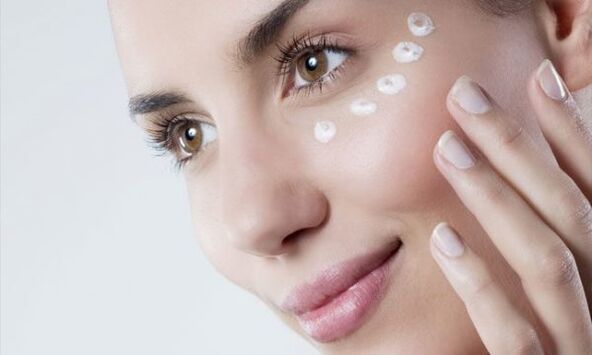
General recommendations:
- For the first three days, the wound should be lubricated with dexpanthenol-based ointment,it will promote rapid healing of micro damage.After that, it is recommended to use a light moisturizer with hyaluronic acid, which is recommended by cosmetologists.
- Washing is not prohibited.For 2 weeks, the epidermis should not be exposed to strong heat, so it is better to refrain from baths and saunas, and do not take hot showers.
- You can't go out without sunscreen,Moreover, it is better to choose protection from 50. If this is not done, hyperpigmentation will appear.Cosmetic products should be used until complete healing, even outside of winter.
After a few weeks, it is recommended to revisit a specialist who performs fractional laser rejuvenation.He must assess the condition of the skin on the face and rule out complications.
Forecast
The result can be seen immediately after healing, if the imperfection is not very noticeable.Wrinkles or deep scars must be removed through several procedures.
Visually, the skin is smoother, has a natural color, the face is tightened and looks blooming in 99% of cases.
One percent is allocated for unforeseen circumstances, inadequate care, and lack of doctor's qualifications.
Advantages of the method
Many patients are attracted to this method because of its significant advantages that deserve attention.By choosing photothermolysis, one receives the following:
- low cost with high efficiency;
- pain;
- effects of even one procedure;
- non-invasive;
- no strong side effects.
In addition, the laser effect solves several problems of the aesthetic component of the epidermis at once, which is good news.
Cons
If you choose the wrong clinic for rejuvenation or do not strictly follow the recommendations of a cosmetologist, you can develop large pigment spots on half of your face, which will not be easily removed.
In addition, the laser treatment lasts quite a long time, during which the patient experiences an unpleasant smell on the damaged skin, which not everyone can endure.
Another disadvantage is the incomplete results of one procedure for deep depressions, scars and wrinkles.
Opinion review
Fractional rejuvenation is gaining popularity in cosmetology.Every year more and more women choose the laser instead of the scalpel.